Ironing Service Pricing Guide UK: How to Set Your Rates Per Item
Typical per-item ironing rates across the UK, the five factors that move prices up or down, and how to build a rate card that's profitable and easy to communicate to customers.
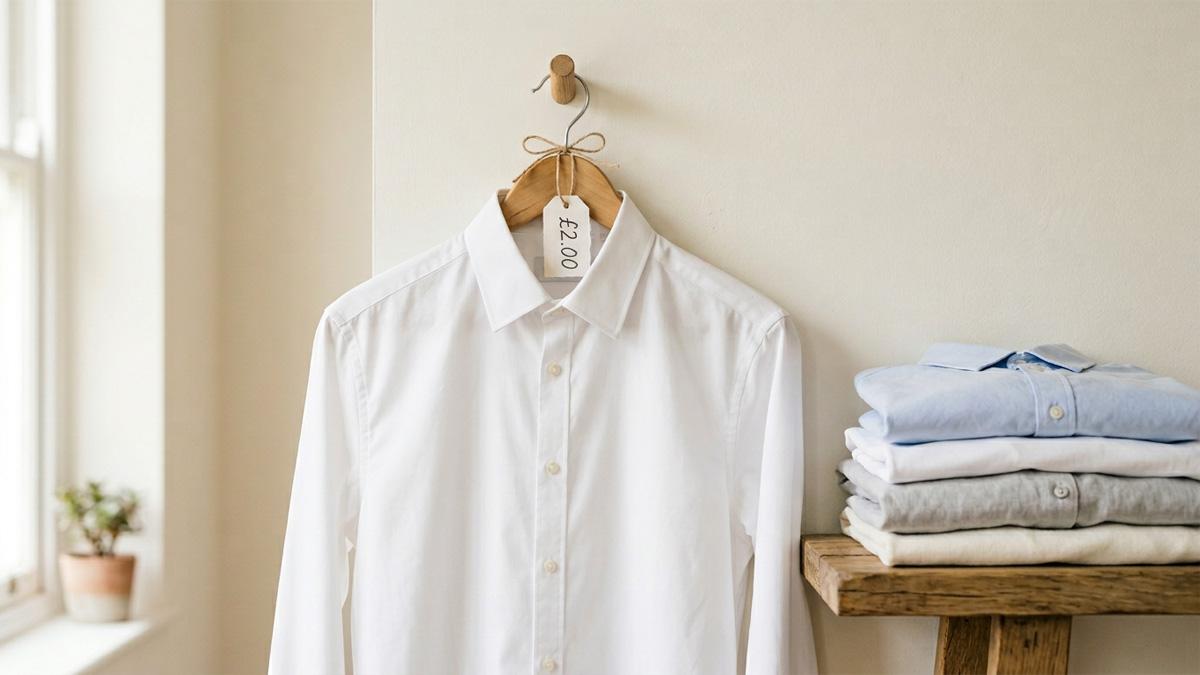
Setting the right price for your ironing service is one of the most important decisions you'll make as an operator. Charge too little and you'll work yourself into the ground; too much and customers will look elsewhere. This guide walks through typical per-item rates across the UK, the factors that move prices up or down, and how to build a rate card that's profitable and easy to communicate. Before finalising your rates, make sure you have a clear picture of your costs — see our Ironing Business Startup Costs UK guide.
Typical per-item ironing prices in the UK
Most UK ironing services price by the item rather than by the hour. Here are typical market rates:
- Shirt or blouse — £1.50 to £2.50
- Trousers or jeans — £2.00 to £3.00
- Dress (simple) — £2.50 to £3.50
- Dress (complex, pleats, embroidery) — £4.00 to £6.00
- Suit jacket or blazer — £3.50 to £5.00
- Bedsheet (single) — £2.50 to £3.00
- Bedsheet (double/king) — £3.50 to £4.50
- Pillowcase — £0.80 to £1.20
- Duvet cover (double) — £5.00 to £7.00
- Tablecloth (large) — £3.50 to £5.50
These are market benchmarks, not rules. Your rates should reflect your local area, overheads, and positioning — more on that below. For a detailed regional breakdown, see our ironing service rates by region.
Why pricing per item beats pricing per hour
Per-item pricing gives customers certainty. They know before they hand over their bag what the invoice will look like, which reduces friction and disputes. It also rewards your efficiency: as you get faster at pressing shirts, your effective hourly rate improves without you raising prices.
Per-hour pricing is common in some parts of the UK but it creates the opposite dynamic — customers worry about slow work, and you're penalised for getting better.
Five factors that affect your ironing rates
1. Location
London and the South East typically support rates 15–30% above the national average. Rural areas often sit at the lower end of the range. Research what two or three local competitors charge — not to copy them, but to understand the price ceiling your market will accept.
2. Collection and delivery
If you collect and return garments, factor in fuel, mileage, and time. A common approach is to charge a flat collection/delivery fee (e.g. £4–£8 per round trip) on top of the item rate, or to build it in with a minimum order value.
3. Turnaround time
Standard turnaround (48–72 hours) sits at baseline rates. Same-day or next-day service can command a 20–50% premium. Be honest with yourself about capacity before offering express slots — overpromising damages your reputation more than underpromising.
4. Garment complexity
Pleated skirts, shirts with French cuffs, delicate fabrics, and structured jackets all take longer. A two-tier price list — standard and premium/complex items — is cleaner than trying to price every variation separately.
5. Volume discounts
Regular customers who send a minimum number of items per week are worth a small loyalty reduction. Even 5–10% off a weekly order keeps customers loyal and reduces acquisition cost. Set a clear threshold (e.g. 20+ items per visit) so the discount is earned, not assumed.
How to build your rate card
A clear, simple rate card does three things:
- Sets customer expectations before the order is placed
- Reduces pricing conversations on collection day
- Makes invoicing faster and less error-prone
See our laundry invoicing guide for what every invoice should include.
Keep your list to the 10–15 most common item types. Group similar items together (bedlinen, shirts, dresses) and note any minimum order value. Publish it on your website, send it in your booking confirmation, and print it on your collection receipt if you use one.
Should you ever price by weight instead?
Per-kg pricing is well suited to wash-and-fold services where items are processed as a bulk load rather than individually pressed. For ironing-focused businesses it's less common because garments vary so much in complexity — a silk blouse and a cotton t-shirt weigh roughly the same but take very different amounts of time.
Some operators use a hybrid: per-kg for wash and dry, per-item for ironing. This works well if you offer a full laundry service and want to keep the billing clean.
Reviewing your prices
At minimum, review your rates every six months. Energy prices, fuel costs, and wage inflation all affect your margins even when your item rates stay flat. A 5–10% annual increase is easier for customers to absorb than a large jump after two years of holding steady.
When you do raise prices, communicate early, explain briefly (rising operating costs), and thank customers for their loyalty. Most long-standing customers accept a modest increase without complaint if it's handled respectfully.
Putting it all together with DashGrow
Once you have a rate card you're happy with, the next step is invoicing each job professionally and getting paid without chasing. DashGrow lets you store per-item prices in a pricing catalogue, apply them to bookings in seconds, and send a branded PDF invoice by email — all from the same dashboard or from your iPhone.
Once your rate card is set, your laundry booking system applies those prices to every job automatically. If you're still tracking jobs in a spreadsheet, a 14-day Pro trial will show you how much time you can claw back on the admin side of running an ironing service. And if you're looking to grow beyond your current customer base, our guide on how to get more laundry customers in the UK covers proven strategies for attracting new business.